
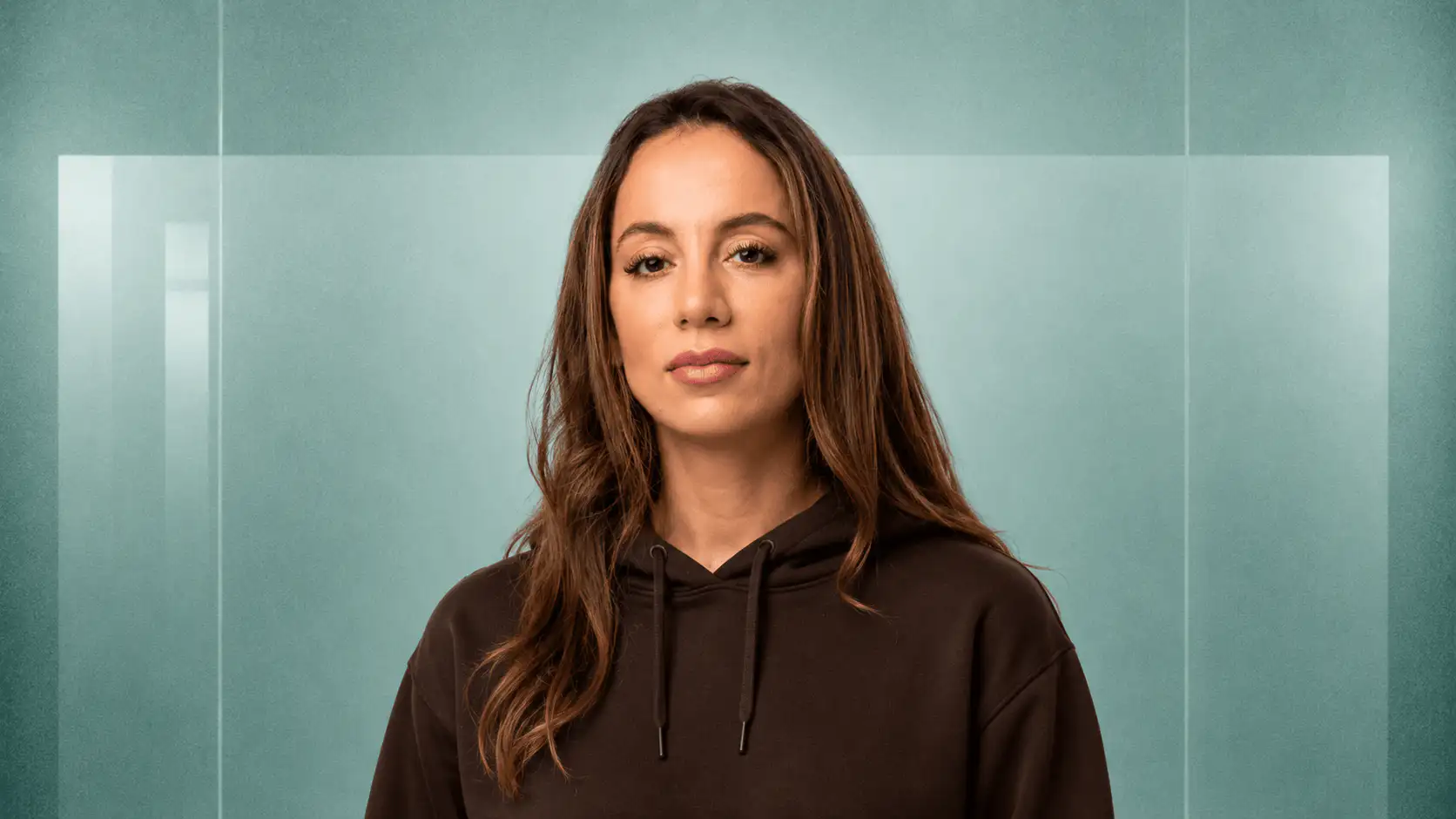
Mira Murati appeared at Bloomberg Tech in San Francisco on June 4, marking her first major public appearance in roughly 18 months. As CEO of Thinking Machines Lab, the company she founded after leaving OpenAI in September 2024, she used the Bloomberg stage to preview "interaction models" — a product architecture that processes audio, text, and video as continuous parallel streams in 200-millisecond intervals rather than the turn-based prompt-and-response loop that defines most AI interfaces today. She framed it as an early direction, not a finished product, and declined to attach a release timeline.
The financial backdrop matters. Thinking Machines raised $2 billion at a $12 billion seed valuation in July 2025, then sought a valuation of $55 to $60 billion from prospective investors in November 2025. Those talks collapsed by January 2026. Investors declined to support the higher valuation without a more substantial product record. The company now sits at its original $12 billion valuation, with roughly 140 employees, one live product in Tinker (a fine-tuning API for open-source models), and infrastructure commitments from Nvidia and Google. Several high-profile researchers have departed in recent months, a subject Murati addressed briefly and downplayed.
The appearance itself was measured. Murati revisited the November 2023 OpenAI board crisis, argued for structural governance checks rather than reliance on individual virtue, and pushed back on both utopian and dystopian framings of AI's trajectory. What she chose not to say was as legible as what she did. No product release date. No funding announcement. No direct answer on whether she trusts Sam Altman. The calculus was clear: re-enter the conversation, control the frame, ship nothing premature.
The Signal for Enterprise Buyers
Buyers of frontier AI infrastructure are watching founder credibility as a trust proxy. Thinking Machines has $2 billion in capital and infrastructure deals with Nvidia and Google, but has shipped one API product in 18 months. The failed $55 to $60 billion valuation attempt is now part of the public record. Enterprise buyers evaluating Thinking Machines as a long-term vendor have a legitimate question: is this a category-defining AI lab or a well-capitalized idea? The Bloomberg appearance moves the needle slightly on founder credibility but does nothing to answer the product question. Until Thinking Machines ships interaction models at a quality level that enterprise buyers can evaluate in a pilot, the trust gap remains wide.
Why Vendors Should Read This Carefully
The Murati story is a live demonstration of what happens when a founder-as-media motion is neglected for too long. Eighteen months of silence in an environment where OpenAI, Anthropic, and xAI are generating daily narrative meant Thinking Machines ceded the category conversation entirely. The cost showed up directly in the January 2026 fundraise collapse. Investors need a narrative to support a valuation, and narratives require founder-generated signal. A single Bloomberg appearance, however well-managed, cannot compress 18 months of absence. The lesson for every Series A and B AI founder right now: building in the background is not a GTM strategy. It is a trust deficit that compounds.
1. Founder-as-Media · Cross-Quadrant Amplifier
Murati's Bloomberg appearance is the motion activating, late. The Founder-as-Media motion requires a consistent publishing cadence across multiple channels over 12 to 24 months to build the trust and narrative presence that compounds into pipeline and valuation support. A single high-profile appearance after 18 months of silence is not the motion. It is an attempt to restart it. The cost of the gap is visible: a valuation ceiling that collapsed without the narrative infrastructure to support it.
2. Build-in-Public · Cross-Quadrant Amplifier
Thinking Machines has done the opposite of build-in-public. The motion requires operating cadence made visible weekly, which transfers trust through demonstrated velocity. Instead, the company has operated as a closed lab, releasing almost no signal about what it is building or how. The valuation attempt at $55 to $60 billion without a public product record is what happens when a company tries to price at Cathedral levels without running the trust-building motions that Cathedral buyers require.
3. API-First / Docs-as-Funnel · The Wedge (Q1)
Tinker, the fine-tuning API for open-source models, is a Wedge motion. Developer-facing, API-callable, self-serve. But Tinker has been running in near-silence without the documentation-first, community-activation work that makes this motion compound. An API with no surrounding developer narrative is not a funnel. It is a product waiting for a motion. The Bloomberg preview of interaction models suggests Thinking Machines' real product thesis is not in fine-tuning APIs but in a new interaction layer. That is a more expensive motion to prove.
4. POC / Pilot-Led · The Operator (Q3)
When Thinking Machines eventually ships interaction models to enterprise buyers, the proof mechanism will be pilot-led. The product thesis — real-time multimodal interaction that matches how humans actually communicate — cannot be demonstrated in a demo. It has to be experienced in a live deployment context with real users. Enterprise buyers evaluating this technology will require paid pilots with defined success criteria before committing to annual contracts. The gap between "interaction model research preview" and "pilot-ready enterprise product" is where Thinking Machines' next 18 months live.
The combination of a neglected Founder-as-Media motion, a Wedge API product without surrounding narrative, and an enterprise thesis that will require Operator-quadrant proof signals something important: Thinking Machines is a Cathedral-priced company currently running no Cathedral-qualifying motions.
Across the 700+ enterprise AI transformations and 88 insurance AI vendor profiles we have mapped, the same pattern keeps showing up. Three layers worth naming:
Layer one. Valuation and trust are not the same currency, but investors conflate them until they do not. Thinking Machines priced at $12 billion on founder reputation and team pedigree, then sought to more than quadruple that on a single live product. The market's refusal was not a commentary on Murati's capability. It was a commentary on the absence of the trust-building motions — public narrative, product evidence, community signal — that a $55 to $60 billion valuation requires as its foundation. Reputation opens the first round. The next round needs motion-built proof.
Layer two. The Founder-as-Media motion is not optional for frontier AI labs. It is the only trust mechanism that can operate at the speed of the current cycle. Anthropic has Dario Amodei publishing on safety and capability. OpenAI has Sam Altman generating constant narrative. xAI has its own gravitational field. In that environment, 18 months of silence does not read as focused execution. It reads as absence. Buyers, investors, and talent interpret silence as uncertainty, and uncertainty reprices valuation.
Layer three. The interaction model thesis, if it delivers, is a genuine Wedge-to-Cathedral migration opportunity. Real-time multimodal AI that mirrors natural human communication is the kind of technical differentiation that starts with developer adoption, earns enterprise deployment, and eventually becomes a new infrastructure standard. But the migration requires running the motions in sequence: developer API adoption first, enterprise pilot evidence second, analyst and institutional recognition third. Thinking Machines has none of those stages instrumented yet. The Bloomberg appearance is the start of a motion stack, not the middle of one.
Thinking Machines is a $12 billion company with $2 billion in capital, strong researcher pedigree, and a product thesis that could matter. It is also a company that has not run its GTM motions. The Bloomberg appearance is necessary but late, and a single stage appearance does not compress 18 months of trust deficit in a category where narrative is compounding daily.
Three questions for every AI founder watching this:
By Q4 2026, every frontier AI lab at $5 billion valuation and above will face an explicit investor question about the gap between capital raised and public trust signals generated. The ones without an answer will find their next round more difficult than their last.
What is your experience with founder-as-media as a trust mechanism in high-stakes enterprise environments? Drop a note or reach out directly.



.svg)


